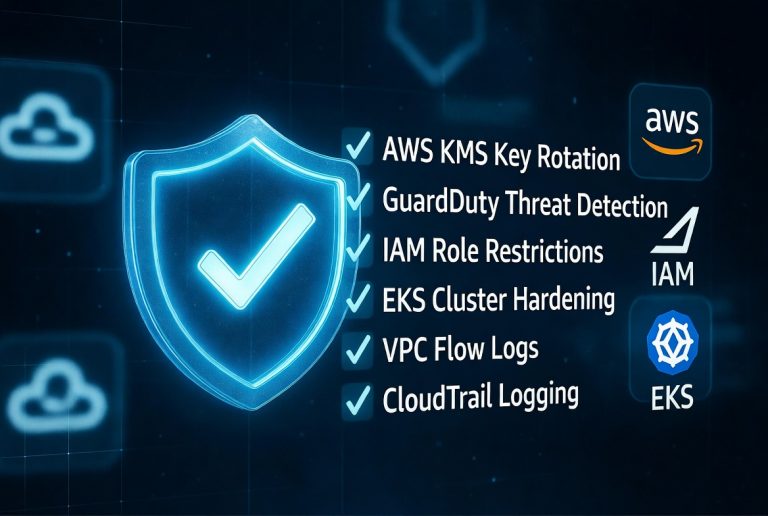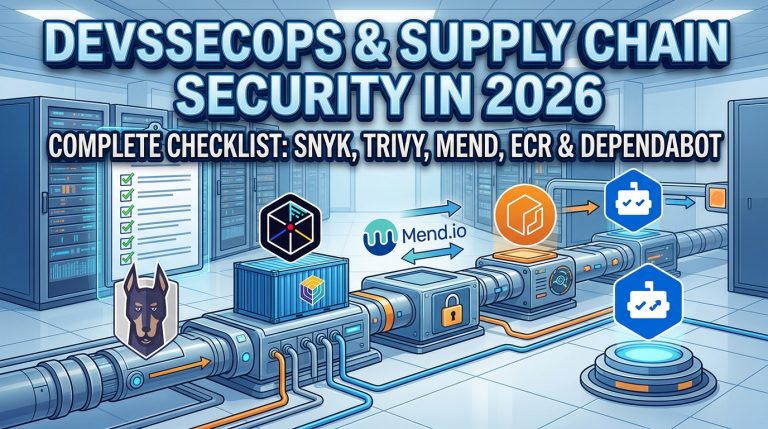
Identity & Access Management Mastery in 2026: The Least-Privilege + Zero Trust IAM Checklist I Actually Use in Production
In every role I’ve held — from hardening PCI-compliant financial microservices at SWBC to migrating user identities from Amazon Cognito to Auth0 at Celink — the single biggest source of risk and audit findings has always been Identity & Access Management.
After 15+ years of designing, breaking, and fixing IAM systems across AWS, Azure, Kubernetes, and hybrid environments, here is the exact checklist I run on every single engagement before signing off on a design.
1. Foundation – Stop Using Long-Lived Credentials Today
- Delete or disable all IAM users with access keys (except break-glass accounts in a separate account)
- Use IAM Roles + temporary credentials everywhere (assume-role, federation, OIDC)
- Enforce AWS Organizations SCPs that deny creation of IAM users and access keys
- Enable IAM Access Analyzer + IAM Access Analyzer findings as code
Quick win: Create an SCP that prevents anyone from creating an IAM user with console access unless it’s explicitly in the Security OU.
2. Modern Federation & Authentication (The 2026 Standard)
- Prefer AWS IAM Identity Center + external IdP (Okta, Azure AD, Google) over direct Cognito user pools when possible
- For application-level auth: OAuth 2.0 + OIDC with short-lived tokens (never long-lived refresh tokens in client-side code)
- Use Amazon Cognito only for mobile/web apps and always with Cognito User Pools + Identity Pools + proper attribute mapping
- Real-world example I implemented: Full migration from Cognito to Auth0 while maintaining zero-downtime and audit trail
3. Least Privilege & Policy Best Practices
- Never attach policies directly to users or roles — always use managed policies + inline policy boundaries
- Implement Permission Boundaries + Session Policies for every role
- Use Attribute-Based Access Control (ABAC) with tags wherever possible (e.g., Project:Payments, Environment:Prod)
- Regularly run IAM Access Analyzer + Policy Simulator
4. Container & Kubernetes Identity (EKS Edition)
- Use IAM Roles for Service Accounts (IRSA) — never use node IAM roles for workloads
- Implement Pod Identity (newer and cleaner) + Kyverno or OPA/Gatekeeper policies
- Map AWS IAM to Kubernetes RBAC using aws-auth ConfigMap or the new EKS Pod Identity Agent
5. Automation & Continuous Hardening
- Automate credential rotation (RDS, IAM keys, SES SMTP) — I built and documented this exact solution
- Enforce MFA + strong password policies + conditional access
- Monitor with GuardDuty + Security Hub + IAM Access Analyzer alerts
Free Instant Download
I turned this entire checklist into a clean, printable one-page PDF with checkboxes, console shortcuts, and Terraform snippets.
→ Download the 2026 IAM & Zero Trust Identity Checklist (Free) (no email gate for now)
You’ll also find the matching AWS IAM + OIDC Reference Architecture diagram in the Visual Library.
What’s next? In the coming weeks I’ll publish:
- Full architecture + Terraform for automated key rotation across RDS + IAM + third-party secrets
- Step-by-step Cognito → Auth0 secure migration guide
- Production-grade Kubernetes RBAC + IRSA policy library
Bookmark this page — this is the second pillar of many.
Have a specific IAM challenge you want covered (Bedrock agent permissions, API Gateway authorizers, multi-account strategy, biometric + OAuth patterns)? Drop it in the comments or reach out on the Contact page. I read every message.
— Alex Petrovic AWS Certified Security – Specialty Cloud Security Architect & Secure SDLC Practitioner